Weep Holes
Spaced outlets through the wall face that let built-up water escape before it creates pressure.
WallGuard Wellington
A retaining wall is really holding back two things: soil, and the water that moves through it. When that water has nowhere to go, hydrostatic pressure builds up behind the wall, and that’s when you start seeing bulging, cracking or a wall that leans a little more each winter. Good Retaining Wall Wellington construction always plans for this from the outset, which is why our specialists build drainage into every wall we install and can also retrofit it to existing structures that are showing early signs of stress. We use free-draining aggregate, geotextile fabric and perforated pipework to move water away from the wall face before it ever has the chance to cause damage, protecting both your wall and the ground above it for the long term.
Thank you.
Your estimate request has been received — we’ll be in touch shortly.
WallGuard Wellington
Trapped water adds weight and pressure to the soil directly behind a wall, a force engineers call hydrostatic pressure. Over time it pushes walls forward, cracks mortar joints and rots timber posts. In Wellington’s clay-heavy soils and high winter rainfall, an undrained wall is often just a matter of time before it needs expensive repair or full replacement.
Get a free estimate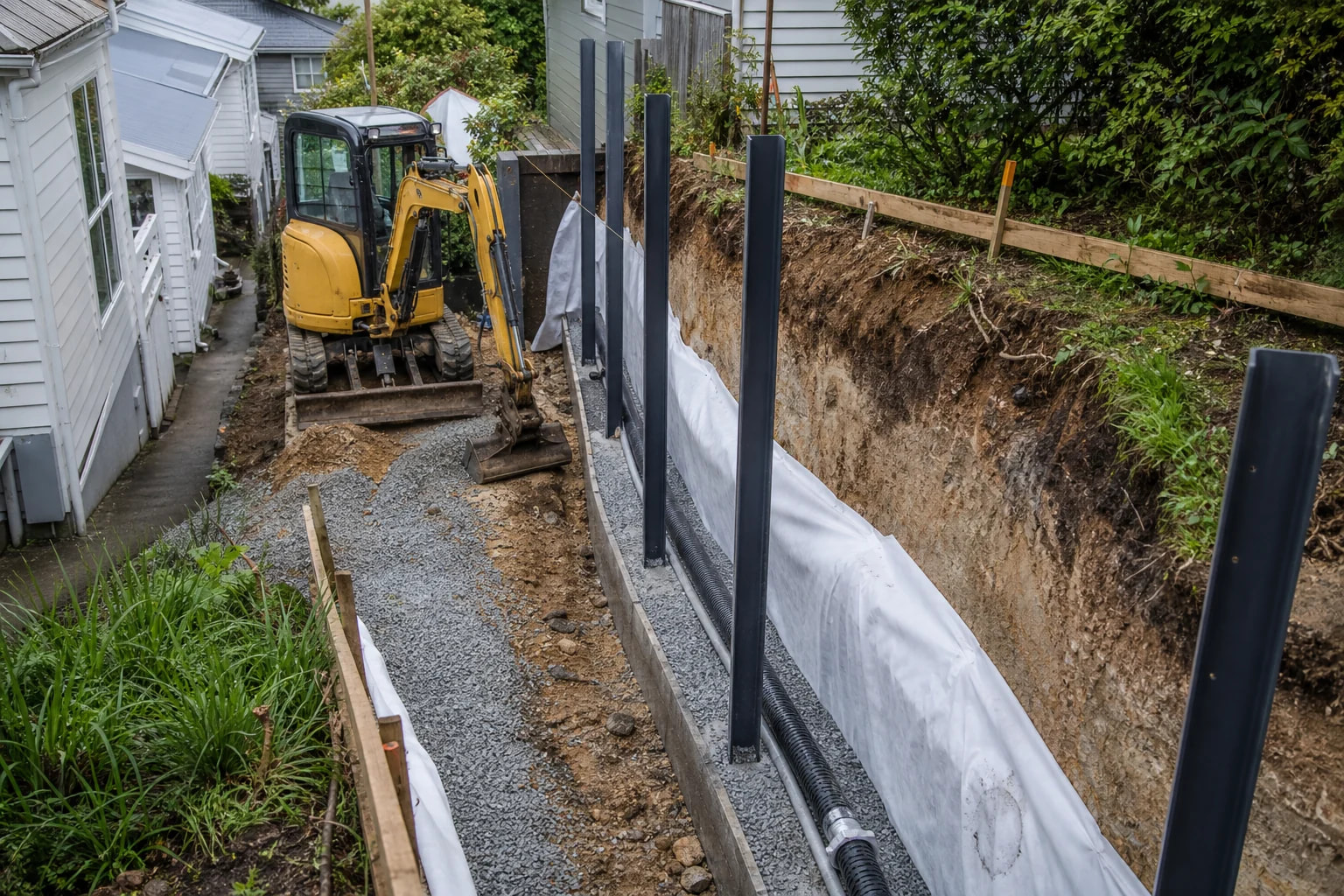
WallGuard Wellington
Spaced outlets through the wall face that let built-up water escape before it creates pressure.
Free-draining gravel placed directly behind the wall, wrapped in geotextile fabric to stop soil clogging the drainage layer.
Perforated pipe laid at the base of the wall to carry collected water safely away to a stormwater outlet.
WallGuard Wellington
If your wall is showing damp patches, efflorescence, bulging or seasonal cracking, drainage is often the missing piece rather than the wall itself. Our specialists can assess the cause, install additional weep points or subsoil drainage, and in many cases save you the cost of a full rebuild.
Get a free estimate
WallGuard Answers
Plan your Wellington retaining wall with clear, practical information.
Get a Free EstimateCommon signs include damp patches or white mineral staining on the wall face, water pooling at the base after rain, a wall that bulges or leans, or soil that stays waterlogged behind the wall. Any of these are worth having assessed.
In most cases, yes. We can install additional weep holes, subsoil pipe or surface drainage without removing the existing wall, provided the structure itself is otherwise sound.
Yes, drainage is a standard part of every retaining wall we design and build, regardless of the material used. We size and detail the drainage system for your site’s soil and rainfall.
Ready to start your project?
Get a free, no-obligation quote from Wellington's retaining wall specialists.